
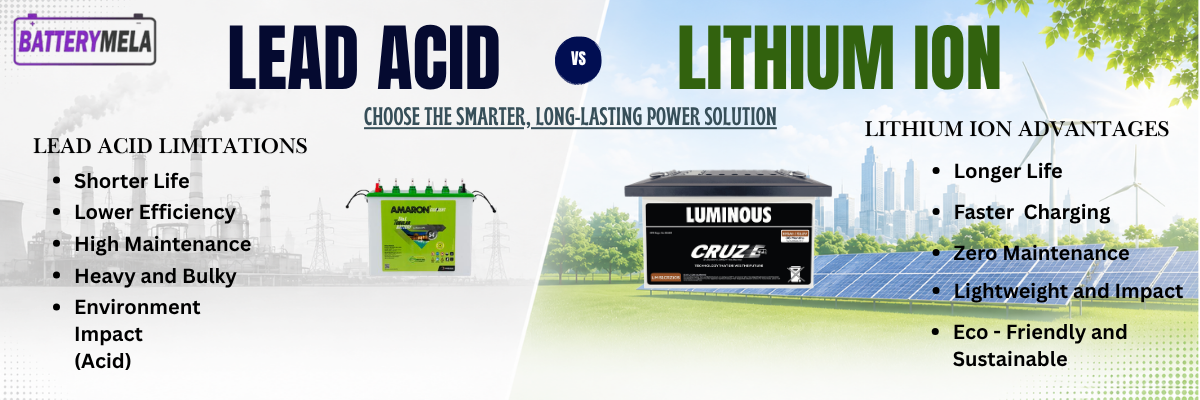
Lead Acid VS Lithium Ion Battery
What is Lead Acid ?
A lead acid battery is a type of battery that converts chemical energy into electrical energy using lead and sulfuric acid.
Lead Acid Limitations:-
Shorter Life
Lead acid batteries generally have a lifespan of 3–5 years, depending on usage and maintenance. Frequent deep discharging can reduce their life further, requiring earlier replacement compared to lithium-ion batteries.
2. Lower Efficiency
These batteries have an efficiency of around 70–85%, meaning some energy is lost during charging and discharging. As a result, they deliver less usable power and take longer to recharge.
3. High Maintenance
Traditional flooded lead acid batteries require regular maintenance, such as checking electrolyte levels and topping up distilled water. Neglecting maintenance can affect performance and battery life.
4. Heavy and Bulky
Lead acid batteries use lead plates and liquid electrolyte, making them larger and heavier than newer battery technologies. They require more installation space and are difficult to move.
5. Environmental Impact Due to Acid Content
These batteries contain lead and sulfuric acid, which can be harmful to the environment if not disposed of properly. Improper handling may lead to soil and water contamination, making responsible recycling essential.
Lithium Ion
What is Lithium Ion?
A lithium-ion battery is a rechargeable battery that uses lithium ions to generate electricity, providing efficient, lightweight, and long-lasting power.
Lithium Ion Advantages:-
Longer Life
Lithium-ion batteries typically last 8–15 years or 3,000–6,000 charge cycles, depending on the model and usage. This means fewer replacements and better long-term value compared to lead acid batteries.
2. Faster Charging
These batteries can charge much more quickly because they have a higher charge acceptance rate. Most lithium-ion batteries can reach full charge in a few hours, reducing downtime and ensuring power is available when needed.
3. Zero Maintenance
Unlike traditional lead acid batteries, lithium-ion batteries are completely maintenance-free. There is no need to top up distilled water, check acid levels, or perform regular servicing, making them convenient and hassle-free.
4. Lightweight and Impact Resistant
Lithium-ion batteries are compact and lightweight, making them easier to transport and install. Their robust design also offers better resistance to vibrations and physical impacts, making them suitable for various applications.
5. Eco-Friendly and Sustainable
Because of their longer lifespan and higher efficiency, lithium-ion batteries generate less waste over time. They consume energy more efficiently and require fewer replacements, contributing to a more sustainable energy solution.